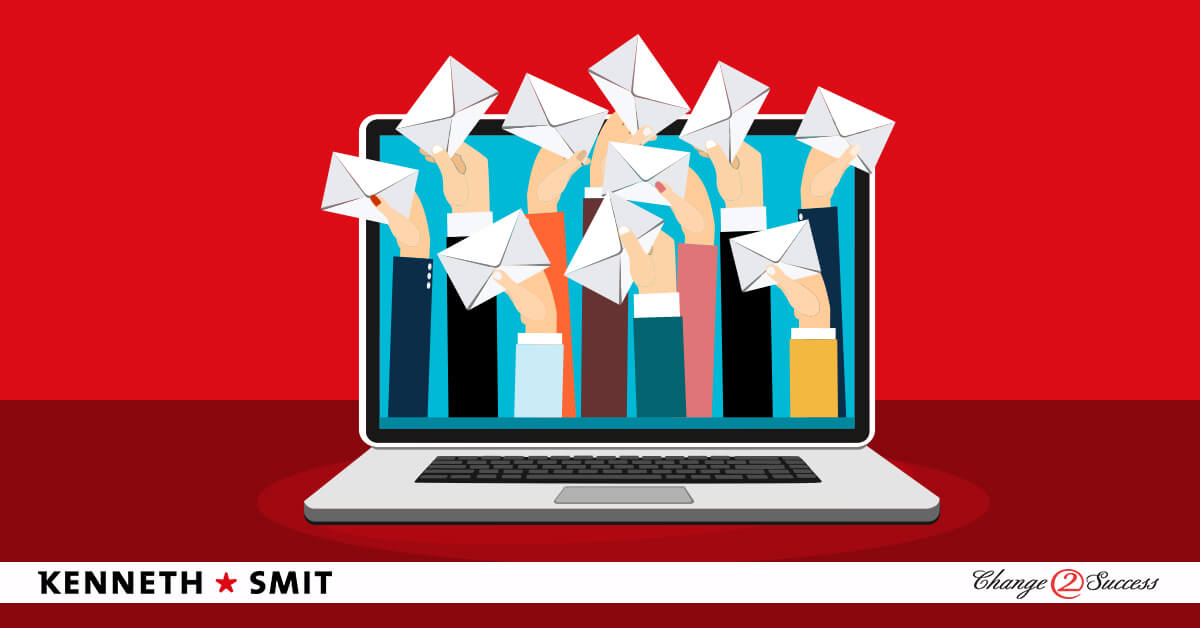
For many people, their work email is a huge source of frustration. In fact, a source that can cause serious stress symptoms. Research by the Dutch Association of Professional Organizers shows that more than 30% of Dutch people experience stress related to their work email. Recognizable? Then this blog is really meant for you!
Mailbox and common frustrations
Emails can cause a lot of frustration and irritation. What about the eternal stream of CCs? 'You were able to read that, you were in the CC!'. Or those colleagues who send an email and are at your desk 10 minutes later. But, the biggest frustration is the amount of mail you receive that you have to sort through when you return from vacation. It is often hundreds of emails. Your first day at work has completely disappeared and you are still not fully updated. In addition, new emails arrive throughout the day. You can no longer see the forest for the trees, which causes stress. In daily practice we encounter mailboxes with hundreds if not thousands of outstanding messages. Our record? A manager with 11.582 emails in his regular inbox!
6 golden tips to get your email under control
Business e-mail therefore causes a lot of stress. Unnecessary as far as we are concerned. We have therefore listed our 6 most important tips for you.
Dare to be rigorous
Mailbox management mainly comes down to making choices. Rigorous choices. Is an email older than 2 weeks? Then move it to the archive box without hesitation. If it is really important, then you have already heard something about it or there will certainly be more recent emails in your mailbox on the same subject. Or your colleague is at your desk, of course. In short, archiving. Don't delete it, of course. Furthermore, it is advisable to immediately delete newsletters, unimportant emails and insignificant CC email exchanges. You have more important things on your mind.
Don't delay simple responses
It is tempting not to answer emails immediately when scanning your inbox because you first want to create an overview. However, this type of procrastination ultimately only causes more stress. In short, if there are emails (and there certainly are) that you can answer immediately with a short response, do so! Every deleted email is one.
Work with folders, for your own good
We recently saw a mailbox with 4.328 open emails. All in the central inbox. To drive you crazy of course, literally. So, for your own good, work with folders such as 'archive', 'reply' and 'urgent', so that you always have an overview and can determine priorities.
Make room in your agenda
There are always a number of emails that you really have to dig into, that require more research. Important emails that need your attention. Procrastination is also extremely dangerous for these types of emails. Reserve time in your calendar, for example 30 minutes a day, to answer such emails.
Work towards an empty inbox
Try to work towards a mailbox that is almost empty at the end of the day, or consists of a maximum of 5-10 emails. As soon as you have to start scrolling through your inbox, you no longer have it under control and stress can set in. In short, actually delete finished emails, make choices and, as mentioned, work with folders. An empty inbox provides a lot of peace of mind.
Choose to keep or archive
Opinions differ. One person wants to keep up during his or her holiday, the other person wants to disconnect completely. Whatever you choose, make a choice. When on holiday, setting aside 15 minutes every day (or once every two days) to clean out your mailbox can avoid a lot of stress. If you do not want this, which is understandable, then make real choices when you return and archive and delete the less important email.
How you can plan your daily work and regain control of your agenda is discussed in detail in our Time Management training courses. Want to know more about the possibilities? Contact us.