

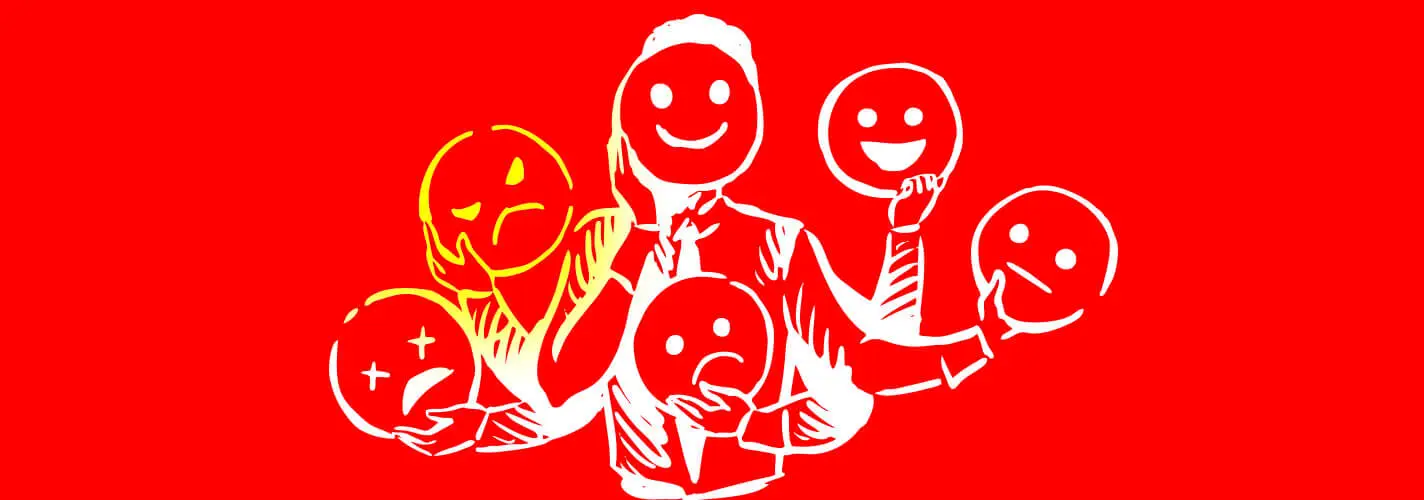
Emotions play an important role in every team. Just look at sports. Players regularly allow themselves to be provoked and then do stupid things purely based on emotion. For example, Zidane in the 2006 World Cup final, with his world-famous headbutt. This is no different in the workplace. Colleagues can provoke each other and emotions play a major role every day. As managers, shouldn't we focus more on managing emotions than managing business strategy? And how do you actually manage emotions?
Why are emotions important?
Managing emotions that arise in employees is one of the most challenging tasks for a manager. Why? It is simply very difficult. Emotions are unpredictable, we don't really like them that much. And yet they are crucial to the functioning of our organization. Emotions say a lot about the culture and about the development of your team. But why are they so important?
- Emotions show that someone is involved and has a heart for the cause.
- Emotions tell you a lot about the working atmosphere within your team.
- Unexpressed emotions often lead to work sabotage.
- Emotions are an indicator of the workload and stress in your team.
- Emotions, if managed well, increase productivity and quality.
In other words, emotions play a much more important role than many managers think. Productivity, quality, working atmosphere, workload, these are terms we are used to and that are high on the agenda. We often do not realize that they are largely caused and measurable by emotions.
Recognizing is half the battle
Recognizing the emotions within your team is very important. Every company has a so-called 'iceberg' culture. 20% of the iceberg rises above the water and contains the theoretical vision, mission, objectives and strategy of the organization. So the hard factors. The other 80% is submerged and built on soft factors. Culture, management, power, trust, workload and dozens of other factors. But what are actually the most common emotional factors? Learn to recognize them so you can anticipate them. We distinguish six basic emotions: joy, fear, sadness, anger, surprise and disgust. They all occur in the workplace, you can be sure:
Joy
Successes are achieved, there is joy within the team. Often a sign that your team spirit is good. Then take the time to celebrate success, which helps improve the culture.
Fear
The fear of failure or doing something wrong often dominates an employee. Managers who instill fear in their employees often create a bad and closed atmosphere within the team.
Grief
Something has gone wrong, which creates a sad atmosphere. How does your team deal with this? Is the salesperson in question who sees his deal fail being ridiculed, or supported by the rest of the team? Dealing with grief says a lot about your team.
Anger
The result of injustice, rightly or wrongly. Managing anger is very difficult. This emotion actually only surfaces when things have really gone wrong within your organization. Anger towards the outside world, for example against a 'common enemy', does not always have to be negative.
Disgust
Often occurs between team members who do not like each other. The political games played internally often lead to disgust in others. As a manager you can influence this by not being open to political games and communicating this clearly.
Amazement
Often the result of poor communication. Why was colleague x fired? Why is the company moving towards y? Keeping your team well informed prevents the chance of a negative form of surprise.
Managing emotions
Traditional aiming managers spend most of their time and attention on the top 20%. The vision, mission and targets of the organization. Recognizable? But, is that the best way? Shouldn't we create much more balance in managing our organization between the hard and soft factors, since the soft factors appear to have such a major influence on the end result?
Your attention to the soft factors that influence your team's results makes the difference between a manager and a top manager. Practical days, brainstorming sessions, strategy meetings, policy development. They determine perhaps 20% of your team's success. Important of course, but don't forget the other factors. Managing emotions is how you can make a difference as a manager. Recognize the emotions within your team and actively respond to them.
Of course, the result of your team always comes first. After all, as a manager you are also judged on targets. But results are achieved based on team spirit. Based on trust and commitment.