
Change management is essential for organizations that want to grow and compete. It helps implement changes effectively.
In a rapidly changing world, adaptability is crucial. Organizations must be flexible to survive and thrive.
Effective change management models provide structure and direction. They help navigate complex changes.
These models aren't just theoretical. They're practical and applicable in the real world.
McKinsey's 7S model is one of the most well-known. It focuses on seven essential elements within an organization.
Other models, such as ADKAR and Kotter's 8-step model, also offer valuable insights. They focus on both individual and organizational change.
Resistance to change is a common obstacle. Effective communication and engagement are crucial to overcoming it.
Leadership plays a key role in change management. Good leaders inspire and motivate their teams.
Technology and digitalization are also important factors. They can facilitate and accelerate change.
Culture is the invisible force behind successful change management. It influences how changes are received and implemented.
Practical examples from Dutch SMEs show how these models work in action.
Strengthen and what is change management and why is it crucial for organizations?
Change management is concerned with planning, implementing, and monitoring change within an organization. It goes beyond just strategic changes; it also encompasses the human side of change.
This discipline is essential because change is necessary in a dynamic market. Without effective change management strategies, even the best-planned changes can fail.
Organizations often face internal resistance to change. This can hinder innovation and growth. Change management helps minimize this resistance and promote change acceptance.
Some of the benefits of effective change management include:
- Improved employee satisfaction: Through clear communication and involvement.
- Higher chance of success: Strategic changes are better monitored.
- Competitive Advantage: By adapting more quickly to market changes.
In essence, change management supports organizations in navigating complex processes. It ensures that changes are not only implemented but also embraced by employees.
The crucial role of change management is also evident in the need for continuous development. Organizations that embrace change management have a higher degree of resilience and adaptability.
Innovative organizations continue to learn and improve. They view change management as a strategic advantage that helps them stay ahead in their industry.

Challenges in change in organizations
Organizational change often presents multiple challenges, both internal and external, requiring well-thought-out solutions.
A common problem is employee resistance. People are creatures of habit and can be skeptical of change. They fear the unknown.
In addition, many organizations struggle with a lack of clear communication. Without transparent information, misunderstandings and uncertainties can arise.
Common challenges include:
- Lack of resources: Limited time, money or technology.
- Bad planning: Insufficient preparation and vision.
- Change fatigue: Too many changes in a short time.
Culture also plays a key role. Cultures open to innovation are more likely to accept change. In more rigid environments, change can be seen as a threat.
External factors, such as market changes or economic fluctuations, can exacerbate the challenges. These external pressures require flexibility and rapid adaptation.
Effective change management can smooth out these bumps through sound planning and engaged leadership. Organizations that proactively address these challenges reap the benefits of change.
Overview of the most important change management models
Organizations need structured approaches to change. Various change management models offer guidance and stability.
One of the best-known models is McKinsey's 7S model. This focuses on the interrelationships between seven core components within an organization.
In addition, there's the ADKAR model, designed by Prosci. This model emphasizes individual behavior and ensures that every employee understands and supports the change.
Kotter's 8-step model is also popular and describes a clear step-by-step plan for successful organizational change.
Major models include:
- Lewin's model: Focus on freezing, changing, and refreezing processes.
- Bridges' transition model: Deals with the psychological aspects of change.
- Kübler-Ross theory of change: Adopts an emotional perspective on change.
- Agile change management: Promotes a continuous, iterative approach to change.
Not to be forgotten is the Nudge model, which encourages behavioral change through subtle, positive encouragement. It's often used in conjunction with other models.
PDCA, or the Plan-Do-Check-Act cycle, emphasizes continuous improvement. The model encourages regular evaluations, which is especially useful in dynamic environments.
These models help organizations structure their change processes. They provide a framework for effective implementation and ensure that changes are sustainable.
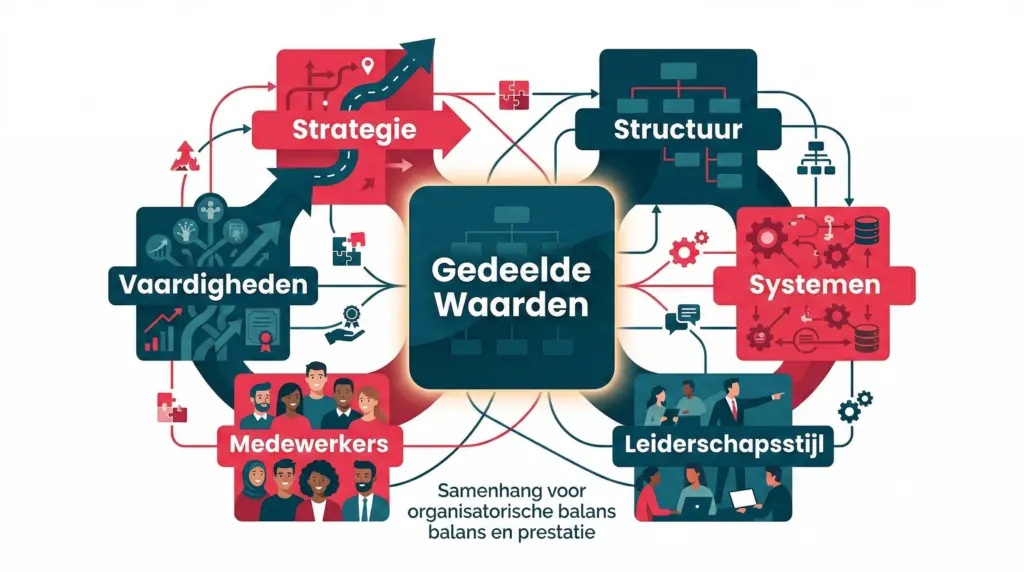
McKinsey's 7S model of change management
McKinsey's 7S model is a classic tool in change management. It offers a cohesive approach to organizational change. The model emphasizes that success depends on the interaction of seven core components within an organization.
The seven components are:
- Strategy: The organization's plan to achieve competitive advantage.
- Structure: How the organization is structured, including hierarchy and reporting lines.
- systems: The daily procedures and processes that keep the organization running.
Continuation of the components:
- Shared values: The core values that define the organization's culture and work ethic.
- Style: The way leaders lead the organization and influence its culture.
- Staff: The employees and their general capabilities.
- Skills: The skills and competencies within the organization.
The 7S model requires all components to be properly aligned. Misalignment can negatively impact an organization's performance.
Organizations using the 7S model consider the interplay between these elements. They ensure that changes are implemented integrally.
A successful example is a company that aligned its structure with a new strategy. This led to improved performance and increased efficiency.
The model emphasizes that change is not just technical, but also encompasses culture and people. This integrated perspective makes the 7S model ideal for complex change projects.
The ADKAR model: focus on individual change
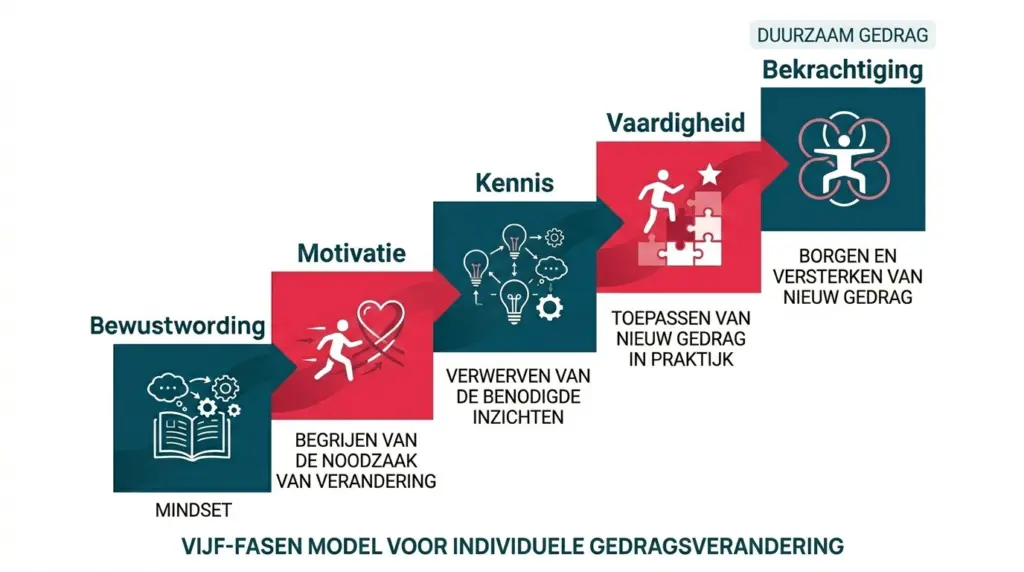
The ADKAR model offers a framework for managing personal change within organizations. The model focuses on understanding individual behavior. This makes it ideal for situations where personal change is crucial to the success of broader organizational change.
The five elements of the ADKAR model are:
- Awareness: Awareness of the need for change.
- desire: The desire to support and participate in personal change.
- Knowledge: Knowledge about how the change can be achieved.
- Skills: The ability to apply new skills and behaviors.
- Reinforcement: Reinforcement to make the change sustainable.
The model emphasizes that successful change begins with awareness. Employees must understand why change is necessary. This creates a foundation for motivation and engagement.
Knowledge is a crucial element. It provides people with the necessary information to implement changes effectively. Without the right knowledge, change remains superficial.
An example of the ADKAR model in action is an organization training employees to use a new technology. By addressing each element of the model, a smooth transition is facilitated.
The ADKAR model enables organizations to successfully manage change projects by focusing on the building blocks of personal development.
Kotter's 8-step model: changing step by step
Kotter's 8-step model is a popular framework for structured change. The model is known for its practical approach. It offers a step-by-step guide to leading organizational change.
Kotter's eight steps are:
- Create a sense of urgency: Stimulate awareness that change is necessary.
- Build a powerful coalition: Build a team that can lead change.
- Develop a vision for change: Formulate a clear vision for the future that provides direction.
- Communicate the vision: Make sure everyone is involved and understands the vision.
- Empower others to act: Remove obstacles and give employees space to change.
- Create short-term successes: Plan visible, achievable goals to boost motivation.
- Consolidate improvements: Use success to increase the credibility of further change.
- Embed change in the culture: Consolidate change by making it part of your business operations.
The first phase is crucial because urgency is the driving force behind every change. Without a sense of urgency, projects can stall.
Building a strong coalition ensures leadership and support across all levels of the organization. This strengthens the change and creates broader support.
Short-term successes are often overlooked but are crucial. They provide visible evidence of progress.
By embedding the changes in the organizational culture, the transformation becomes an integral part of daily operations.
Implementations of this model demonstrate its effectiveness in various sectors. Not only does it provide structure, but it also fosters a culture of continuous learning and adaptation.
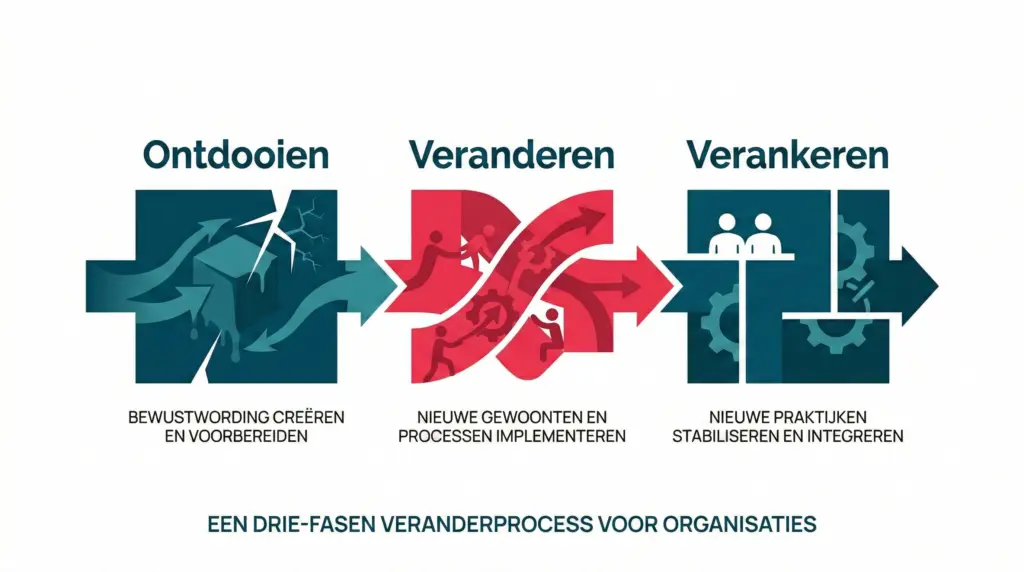
Lewin's change model: unfreeze, change, refreeze
Lewin's change model is simple and powerful. It offers a comprehensible structure for change management through its three-step approach. The model consists of the steps: unfreeze, change, and refreeze.
The three stages of Lewin's model are:
- Unfreeze: Create the need for change and prepare the organization.
- Changes: Implement the actual changes in processes and behavior.
- Refreeze: Stabilize the organization with the new changes.
The first phase, unfreeze , is essential because it loosens the rigid patterns within the organization. This creates a willingness to change.
The actual transformation takes place during the change phase. This phase requires active involvement and support from all involved.
The final phase, refreeze , ensures that new ways of working are embedded and stabilized. It prevents a relapse into old habits.
Lewin's model is applicable to diverse situations, from small organizational changes to large-scale transformations. It emphasizes the need for a structured approach and engaged leadership.
Other relevant models: Bridges, Kübler-Ross, Nudge, PDCA, Satir
Besides the well-known models, there are several other approaches. These can be just as effective in specific situations. They offer unique perspectives on change management.
Important change management models include:
- Bridges' Transition Theory: Focus on the emotional transition, not just on the change itself.
- Kübler-Ross Change Curve: Model that provides insight into the emotional stages of change.
- Nudge Theory: Focuses on subtle guiding mechanisms to promote desired behavior.
- PDCA (Plan-Do-Check-Act): Not only for quality management, but also for continuous improvement and change.
- Satir Change Model: Emphasizes the impact of change on individuals and the associated emotions.
Bridges ' model focuses primarily on the transition process, which is crucial for change. It emphasizes the differences between transition and change.
The Kübler-Ross Change Curve helps leaders understand how teams react emotionally. It improves communication and empathy within an organization.
Nudge Theory is often used for behavioral change without coercion. Small adjustments in the environment lead to positive behavior.
PDCA is essential for organizations focused on process improvement. Its cyclical nature ensures continuous change and adaptation.
The Satir model provides insight into how individuals deal with change. This strengthens the understanding of personal dynamics in a change process.
Resistance to change: causes and approaches
Resistance is a natural reaction within organizations undergoing change. Understanding the causes helps manage resistance effectively.
Common reasons for resistance include uncertainty, fear of loss, and a lack of trust. Inadequate communication reinforces these barriers.
Causes of resistance to change include:
- Lack of information or misunderstandings.
- Concern about personal consequences.
- Fear of loss of power or comfort.
- Distrust in leadership.
- Loss of safety or security.
Effectively addressing this resistance begins with open communication. By listening to concerns and providing clarity, fear and uncertainty can be reduced. Involvement in the change process increases acceptance.
Leaders must proactively offer support and demonstrate empathy. Training and workshops can also help develop the skills necessary for a successful transition.
A transparent change process fosters greater trust and reduces resistance. This results in a positive change experience and motivated employees.
The role of leadership in successful change management
Leadership plays a crucial role in facilitating successful change. Effective leaders inspire and motivate their teams.
A leader must communicate a clear vision. This way, employees understand why the change is essential. This vision must be consistently repeated to ensure commitment.
Successful leadership in change includes:
- Show empathy: Understand employee feelings and concerns.
- Communication skills: Ensure open dialogue and transparency.
- Provide clear guidelines: Provide clarity and direction during the process.
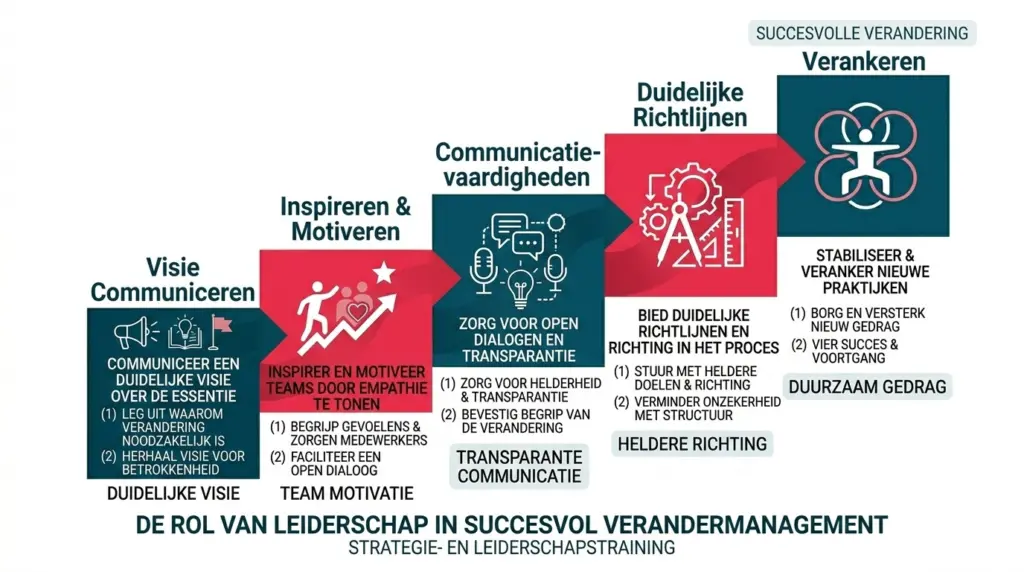
Leaders should also lead by example. This encourages others to embrace the change process. They are responsible for building a supportive culture in which employees feel safe to voice their concerns.
Finally, leaders must monitor the change and adjust as needed. Demonstrating flexibility and adaptability reinforces the success of the change.
Agile change management: flexibility and adaptability
Agile change management focuses on increasing agility within organizations. It enables companies to respond quickly to changing circumstances.
The Agile approach promotes iterative improvements and continuous feedback loops. This allows adjustments to be made when needed.
Key elements of Agile change management include:
- Self-managing teams: Teams that make decisions without hierarchical constraints.
- Short cycles: Regularly evaluate progress and results.
- Customer centricity: Focus on what adds value for customers.
Agile's success hinges on its ability to break down traditional hierarchies. This allows employees to innovate and respond more quickly, increasing team efficiency and motivation. Agile offers organizations a way to stay ahead of market changes and maintain a competitive edge.
The role of technology and digitalization in organizational change
Technology plays a crucial role in modern organizational change. Digitalization can streamline processes and increase efficiency.
Technology-driven change requires strategic integration of new tools. Organizations must view technology as a facilitator of change.
Key ways in which technology supports change include:
- Automation: Reducing manual tasks.
- Data analysis: Gain insights for better decision-making.
- Communication tools: Improved collaboration within teams.
Successful technology adoption requires openness to learning and adaptation. This requires a culture that fosters innovation and digital skills. Technology is not just a tool, but a driving force for sustainable change within organizations.
Culture and change management: the invisible success factor
Organizational culture is often the hidden force behind successful change management. It influences how employees perceive and embrace change.
Culture determines the willingness to accept new strategies and structures. A supportive culture facilitates change and reduces resistance.
Key cultural elements that promote change:
- Open communication: Clarity and transparency in communication.
- Innovation: Encouraging creative thinking and experimentation.
- Trust: Strong relationships and mutual respect among colleagues.
However, changing culture is complex and requires patience and strategic effort. Leadership plays a crucial role in guiding and modeling the desired culture. By cultivating a positive culture, organizations can implement change successfully and sustainably.
Practical examples from Dutch SMEs
Successful change management stories from Dutch SMEs offer valuable lessons. They demonstrate how different models can be applied effectively.
A well-known example is a medium-sized technology company that used McKinsey's 7S model. They restructured their teams and aligned their strategies and systems, which led to improved collaboration and increased efficiency.
Another inspiring example is a family business in the food sector that applied Kotter's 8-step model. By first creating a sense of urgency and then building a powerful coalition, they managed to motivate their employees and implement the necessary changes.
Key learnings from successful SME transformations:
- Strategic alignment: Ensure a strong connection between strategy and execution.
- Employee engagement: Involve employees in the change process to increase support.
- Customer centricity: Keep the customer at the center of every change.
These examples illustrate that with the right approach and commitment, even small organizations can achieve significant change. A strategic and continuous approach to change management is essential. Change management models provide a structured framework for this. Success depends on implementation, employee engagement, and adaptation to the specific context of the organization.
Change management as a continuous process: evaluation and adjustment
Change management isn't a one-time effort, but an ongoing process. Regular evaluation is crucial for sustainable success.
Leaders must continuously monitor the progress of implementations. This means measuring results and comparing them to established goals. They must make adjustments as needed.
An effective evaluation process includes:
- KPI monitoring: Use key performance indicators to measure progress.
- Feedback loops: Collect and analyze feedback from employees and stakeholders.
- Willingness to adapt: Be ready to adjust strategies based on new insights.
By viewing change management as a dynamic process, an organization can better adapt to market changes. This not only increases the likelihood of success but also organizational commitment and agility.
This systematic approach not only helps you stay on track but also fosters a culture of continuous improvement.
Change management as a strategic advantage
Effective change management offers a strategic advantage that sets organizations apart. It enables companies to respond to change faster than their competitors.
Strategic advantage through change management is achieved by:
- Proactive Culture: Encouraging people to see and seize opportunities.
- Rapid Decision Making: Reducing reaction time to market changes.
- Continuous Learning: Implementation of continuous improvement cycles.
This approach not only enables efficiency improvements but also stimulates innovation. A strategic focus on change management means that organizations not only respond to change but can also effectively leverage it for growth and success.
Conclusion and practical recommendations
Change management is essential for organizations that want to grow and adapt to a dynamic market. By choosing the right model, organizations can effectively drive change and achieve results.
Practical recommendations for successful change:
- Select a suitable model: Choose based on your specific organizational needs.
- Involve employees: Ensure communication and involvement at every level.
- Evaluate and adjust: Make change management a continuous process.
Effective implementation of change management can result in a resilient organization that can flexibly respond to future challenges and opportunities. Ensure that change management becomes an integral part of your business strategy.