What is emotional intelligence?
Emotional intelligence, often abbreviated to EQ, is the ability to recognize, understand, and effectively regulate emotions—both your own and those of others. The concept became widely known in the 1990s through the work of psychologist Daniel Goleman , who demonstrated that EQ is at least as decisive for success as IQ.
Furthermore, while IQ concerns cognitive capacities such as logical reasoning and analytical thinking, EQ is about the human side: how do you handle stress, how do you communicate under pressure, and how do you build relationships? In practice, it is precisely these skills that make the difference between a good and an excellent professional.
The five components of emotional intelligence
Goleman distinguishes five components that together form your emotional intelligence. Each component can be developed, which is the good news: EQ is not a fixed given but a skill that you can train.
Self-awareness. The foundation of everything. Self-awareness means knowing what you feel and understanding how those emotions influence your behavior. Someone with strong self-awareness notices becoming irritated in a meeting and can pinpoint the cause of that irritation: is it due to the content of the conversation, fatigue, or an unresolved conflict with a colleague? Without that awareness, you react on autopilot.
Self-regulation. The ability to control your emotions rather than be controlled by them. That does not mean suppressing your emotions. It means choosing how you react. Moreover, a manager receiving bad news about quarterly figures might panic and project that onto the team. Or he could take a breath, analyze the situation, and then come up with a plan. Self-regulation makes the latter possible.
Important issues
Motivation. Intrinsic motivation, to be precise. People with a high EQ are driven by internal goals: the will to grow, to demonstrate personal leadership and make an impact, to finish things. They are more resilient in the face of setbacks because their motivation does not depend on external rewards or recognition.
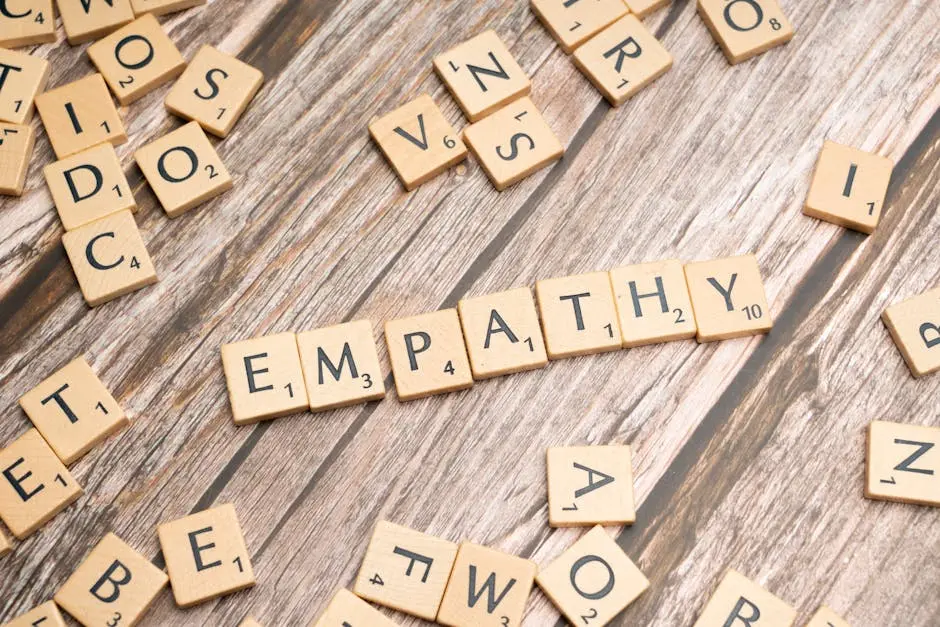
Empathy. The ability to put yourself in someone else's shoes and understand what they feel and think. Empathy is neither pity nor compliance. It is genuinely understanding the other person's perspective, even if you disagree with it. Furthermore, in the workplace, empathy is essential for effective leadership, customer contact, and conflict resolution.
Social skills. The art of building and maintaining relationships, communicating, collaborating, and getting others on board. Social skills are the visible result of the four preceding components: those who know themselves, regulate their emotions, are motivated, and can be empathetic naturally build stronger relationships. This is central to training courses on communication skills .
What is EQ and how does it differ from IQ?
Next, EQ stands for emotional quotient, the measure of your emotional intelligence. It is the emotional equivalent of IQ, but the comparison ends there. IQ is relatively stable throughout your life and is largely determined by innate disposition. EQ, on the other hand, can be developed to a high degree through conscious practice, feedback, and experience.
Another difference: IQ is easily measurable through standardized tests. EQ is harder to capture in a number. While EQ tests do exist, the most reliable way to assess someone's emotional intelligence is by observing their behavior in real-life situations. How does someone react to criticism? How do they handle conflict? How do they communicate under pressure?
Furthermore, there is debate in the scientific literature regarding the precise relationship between IQ and EQ. What is certain is that they are complementary. The sharpest analyst who cannot collaborate will get less far than someone with average analytical skills but strong emotional intelligence. In leadership positions, the connection is even stronger: the higher one rises in the organization, the more decisive EQ becomes for success. Leadership development and EQ development therefore go hand in hand.
Empathy as a core skill
Of the five components of EQ, empathy is perhaps the most underestimated. It is sometimes seen as a soft trait, something for therapists and care providers. But in the workplace, empathy is an absolute necessity.
In short, a sales representative who senses what a customer truly needs closes better deals. A manager who understands why an employee resists change can address that resistance more effectively. A colleague who notices that a teammate is under pressure can step in before it escalates.
Empathy works on three levels. Cognitive empathy is the ability to understand another person's point of view without necessarily feeling it. Emotional empathy goes a step further: you feel with what the other person is experiencing. Incidentally, empathic concern adds action to this: you want to help.
However, cognitive empathy is particularly important in the workplace. You don't have to cry along with a frustrated customer, but you do need to understand where their frustration comes from. That insight enables you to respond effectively. Therefore, the DISC model helps you recognize different communication styles and use your empathy in a more targeted way.
Emotional intelligence in the workplace
The impact of EQ on work performance has been widely researched, and the conclusions are unambiguous: teams and organizations with high emotional intelligence perform better. This manifests itself in multiple ways.
Better communication. People with a high EQ communicate more clearly and effectively. They tailor their message to their conversation partner, listen actively, and respond assertively and constructively. This reduces misunderstandings and accelerates decision-making. EQ plays a particularly large role in non-verbal communication : you read body language better the more emotionally intelligent you are.
Fewer conflicts. Conflicts are inevitable, but the way you handle them makes the difference. Emotionally intelligent professionals recognize tensions early, discuss them openly, and seek solutions instead of assigning blame.
Stronger customer relationships. In customer-facing roles, EQ is directly reflected in results. Customers sense it when you listen sincerely and take their interests seriously. This builds trust and leads to long-term relationships.
More effective leadership. Leaders with a high EQ create a work environment where people feel safe to make mistakes, give feedback, and take initiative. This leads to more innovation, higher engagement, and lower turnover. Different leadership styles require different levels of emotional intelligence.
Better stress management. Professionals with a high EQ recognize stress signals sooner, both in themselves and in colleagues. They can consciously choose how to handle pressure instead of falling into automatic reaction patterns. Stress management and emotional intelligence are therefore closely intertwined.
After all, research by TalentSmart shows that emotional intelligence accounts for 58% of work performance in virtually all positions. Moreover, professionals with a high EQ earn an average of $29.000 more per year than colleagues with a low EQ. These figures underscore that investing in your emotional intelligence not only improves your collaboration but also contributes directly to your career.
EQ and collaboration in teams
Emotional intelligence is not only an individual skill; it also determines how effectively teams function. A team in which members recognize and respect each other's emotions communicates more openly, resolves conflicts faster, and performs demonstrably better.
Nevertheless, in practice, you see that teams with high collective EQ handle change better . They sense resistance sooner, discuss it openly, and find a way forward together. That is also why situational leadership aligns so well with EQ: adapting the leadership style to what the team needs requires being emotionally attuned to your team members.
Effective delegation also requires emotional intelligence. You must not only assess what someone is capable of, but also how they feel about a task. Is there uncertainty? Enthusiasm? Resistance? Picking up on those signals and responding to them makes the difference between a successful assignment and one that gets bogged down.
Can you develop emotional intelligence?
On the other hand, yes. That is perhaps the most important message about EQ. Unlike IQ, which is largely genetically determined, you can actively develop emotional intelligence at any age. Still, it requires conscious effort and practice, but the results are tangible.
Start with self-observation. For a week, keep track of the emotions you experience at work and what triggers them. Not to judge them, but to recognize patterns. Do you notice that you always get irritated in meetings after lunch? That might say something about your energy level at that moment, not necessarily about the meeting itself.
Ask for feedback on your behavior. Through peer supervision or informally: not on your performance, but specifically on how you come across. How do colleagues perceive your communication style? Do they feel heard in conversations with you? The difference between your own perception and how others experience you is often enlightening. The GROW model offers a structured way to work on your EQ together with a coach.
Practice active listening. In the next conversation you have, resolve to respond only after you have summarized what the other person said. That sounds simple, but it is surprisingly difficult. Most people do not listen to understand, but to respond. Active listening also breaks that pattern.
Reflect on difficult situations. After a conflict, a difficult conversation, or a moment when your emotions drove your behavior: take the time to look back. What did you feel? Why did you react the way you did? What could you have done differently? This reflection is the driving force behind growth in EQ.
Invest in time management . It may sound surprising, but good time management contributes to your EQ. When you are not constantly under time pressure, you have more mental space to consciously deal with your emotions. Haste is the enemy of emotional intelligence.
Emotional intelligence and leadership
For leaders, emotional intelligence is not optional. It is a core competency. Research by Goleman and others shows that up to 90% of the difference between average and excellent leaders is explained by EQ, not by technical skills or IQ.
So, that makes sense when you consider what leadership entails. You achieve results through others. That requires understanding what drives people, being able to communicate in a way that motivates rather than demotivates, and being able to regulate your own emotions so that you still make good decisions under pressure.
Leaders with low EQ can be recognized by a number of patterns: they react impulsively to bad news, avoid difficult conversations, take feedback personally, and unconsciously create an atmosphere of fear. Leaders with high EQ do the opposite: they remain calm under pressure, actively seek out difficult conversations, are open to criticism, and build a culture of trust. At Kenneth Smit, we see this confirmed daily in our leadership training courses .
Developing emotional intelligence at Kenneth Smit
Additionally, at Kenneth Smit, we offer several training courses aimed at strengthening emotional intelligence. The Emotional Intelligence training delves deep into all five components of EQ: self-awareness, self-regulation, motivation, empathy, and social skills. You will learn to recognize your own emotional patterns and utilize them more effectively.
In the Insight into Others training , the focus is on the empathy aspect: how do you read the behavior of colleagues and customers, and how do you tailor your communication accordingly? And for those who want to use emotional intelligence to persuade and win over others, the Effective Influencing training offers the translation from insight to impact.
In addition, a good project management approach helps to apply emotional intelligence skills in daily practice. Projects rarely fail due to a lack of technical knowledge, but often due to poor communication and collaboration—precisely the domains where EQ makes the difference.
How can you test and measure emotional intelligence?
Emotional intelligence is less easy to measure than IQ, but reliable methods certainly exist. The best known is the Emotional Quotient Inventory (EQ-i 2.0), a scientifically validated questionnaire that maps your score on various EQ components. In addition, the MSCEIT (Mayer-Salovey-Caruso Emotional Intelligence Test) is widely used in academic and professional contexts.
As a result, in practice there are also accessible ways to gauge your emotional intelligence. Pay attention to how you react in stressful situations: do you get angry quickly, or can you take a step back? Ask colleagues for honest feedback on your communication style. At the end of the day, reflect on moments when emotions guided your behavior.
At Kenneth Smit, we use the DISC analysis, among other tools , as a starting point for understanding your own communication style and that of others. This provides immediate insight into how you emotionally respond to different personality types. Combined with targeted communication training , this results in measurable improvement in your daily interactions.
Also, an important point to consider: EQ tests provide a snapshot. Your emotional intelligence is not a fixed number but a dynamic skill that fluctuates with your energy level, stress level , and context. Regularly measuring and reflecting provides the most reliable picture of your development.
Frequently asked questions about emotional intelligence
Emotional intelligence is the ability to recognize, understand, and effectively manage your own emotions and those of others. It encompasses self-awareness, self-regulation, motivation, empathy, and social skills. A high EQ is often a more determining factor for success than a high IQ, especially in leadership roles.
At the same time, managers with a high EQ build stronger teams, handle conflicts more effectively, and create a positive work culture. They recognize signs of stress or demotivation in employees sooner and can respond appropriately. Kenneth Smit trains managers in developing emotional intelligence.
Yes, unlike IQ, emotional intelligence can be effectively developed. You do this by consciously reflecting on your emotions, actively seeking feedback, practicing empathy, and training your social skills. Targeted coaching and training significantly accelerate this process.
Finally, according to Daniel Goleman, emotional intelligence consists of five components: self-awareness (recognizing your own emotions), self-regulation (managing emotions), motivation (intrinsic drive), empathy (putting yourself in others' shoes), and social skills (building and maintaining relationships). Each of these components can be actively developed through practice and reflection.
Emotional intelligence can be measured using validated instruments such as the EQ-i 2.0 and the MSCEIT. Additionally, the DISC analysis offers practical insight into your communication style and emotional response patterns. At Kenneth Smit, we combine these methods with personal coaching to provide a complete picture of your EQ development.