

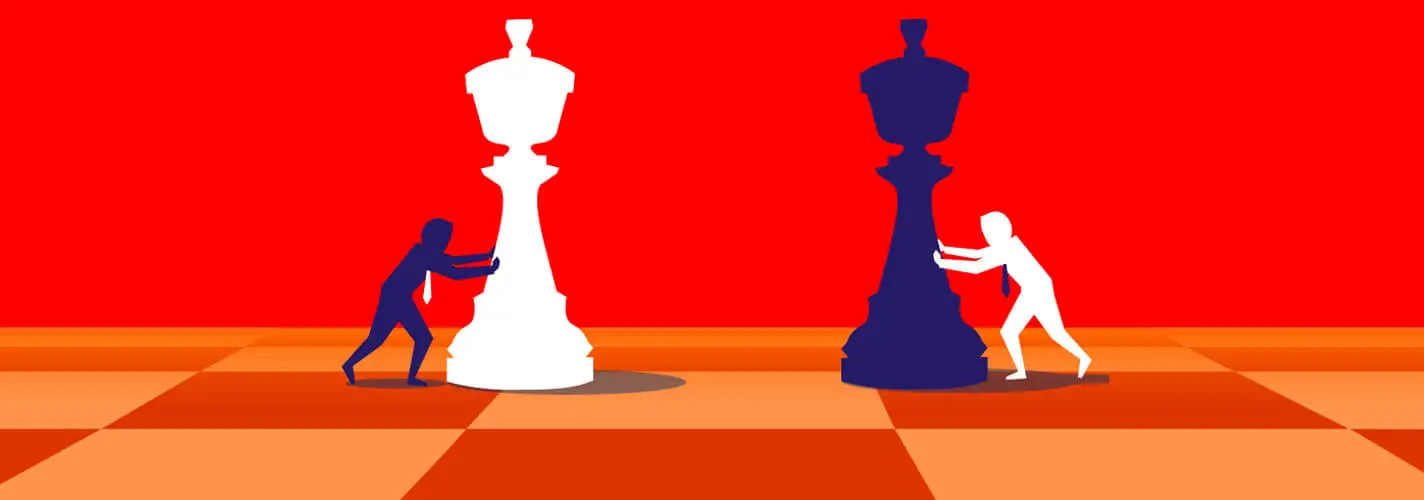
Negotiate is a profession in itself. This became apparent more than once in Belgium this week. After 6 long years of negotiations, an agreement has finally been reached on the dispersal plan for the distribution of 5.000 refugees among Belgian municipalities. Now our southern neighbors are known for being a bit long-winded and sometimes being able to negotiate for a long time, but 6 years is a very long time. Especially with the current refugee crisis in mind.
Man negotiates all his life, from an early age. The various situations you encounter in all phases of life require this. Whether it concerns exchanging football pictures, haggling on holidays or contract negotiations. Negotiation is crucial and can certainly take you far when it comes to contracts. It is therefore strange, to say the least, that negotiation is no longer a self-evident skill for many professionals. Especially now that in difficult economic times it has become even more important to master the art of negotiation.
Master and how can you become an excellent negotiator?
Are you that person who will even haggle for jeans in a Dutch clothing store? Or are you not a real negotiator? Do you see the fun in playing the game, or do you feel vicarious shame during a negotiation? The art of negotiation may be innate, but it can certainly be learned. Two principles are central:
1. Negotiation is give and take
How can you stand up for your own cause in the right way, without appearing rigid and without compromising on your set goals? Negotiating is always give and take. You determine in advance the minimum required outcome for yourself so that you know how far you can go.
2. Negotiation is not personal
A very important principle of negotiation is that it should never become personal. Stand up for your cause without having a personal vendetta or feeling attacked. It's strictly business!
Be inspired by the wise lessons of top negotiator Ruud Lubbers!
You don't come across born negotiators every day. They are scarce, even in the corporate world. Even experienced salespeople often do not like real negotiations. Not a disaster of course, but we can learn a lot from real top negotiators. We rarely see negotiators like Ruud Lubbers. It was Lubbers who laid the foundation for a unique cabinet that no one would have thought possible. A collaboration between CDA, VVD, with tolerable support from the PVV. Our 10 commandments for negotiating are based on Lubbers' experience. Perhaps you can apply them in your daily work and negotiations.
Be trustworthy, never lie
Perhaps the most important of the list. It is always difficult for sellers to be 100% honest. It is tempting to make your company appear better than it is. Don't do it, because you'll get it back on your plate.
Immerse yourself
A good negotiator can empathize with his opponent. Not with the aim of feeling empathy with the other party, but mainly to be able to estimate how your opponent can react to different situations.
Humiliation is a mortal sin
No matter how unrealistic or stupid someone's response may be, never humiliate your opponent. Even if, in your opinion, it goes too far during the negotiations. Humiliation makes it personal. No one can use a personal vendetta during negotiations.
Preparation is crucial
Very simple. Know your file! Know who you are dealing with and what this person is like. Find out his motives and past so that you are optimally prepared.
Provide alternatives
There is a good chance that the most ideal outcome you have in mind is not feasible. Negotiating is always give and take. So make sure you have several scenarios ready that could lead to an agreement in which your interests are satisfactorily represented.
Avoid losing face
The respect of your opponent is of great importance for your position in the negotiation. If the other party feels that you are making certain mistakes, you will lose prestige and your position of power in the negotiation will decrease.
Respect the other
You assume that you will be respected in the negotiation. Usually that is the case, sometimes not. In any case, never lose your respect for the other person and their interests. It may be that your interests are too far apart to reach a deal. No problem can happen. Acting disrespectfully thwarts all possible conversations in the future.
Recognize the actor
Always realize that the other person can play a game. Negotiators can sometimes act well. So try to recognize it when the other person is acting out. Someone who lies often shows many physical clues, take a closer look.
Avoid time pressure
Negotiation and time pressure do not go well together. Never negotiate when there is time pressure. It will usually not benefit your results.
Be yourself
Negotiation may be a game, but always be yourself. Do not pretend to be different or better, and also make sure that you state your interests honestly. Transparency and honesty last the longest, even in negotiations.
Negotiation training
Would you like to practice your negotiation skills with a professional? Then the negotiation training something for you! In this training you will learn about different techniques and take your negotiation skills to a higher level.