Ilse, how did you end up in this industry?
This question of mine immediately triggers Ilse and what follows is a beginning monologue.
Additionally, Ilse Donkers: 'Well, it started as a side job during my studies to become a social studies teacher. After a year in the classroom, I knew that teaching wouldn't be my calling, so I went to work on sailing ships.'
Not a logical choice, but it seemed like fun to me. First in the Netherlands on the 'brown fleet' as a sailor on old cargo sailing ships that are now used as passenger ships.
Next in the Baltic Sea, also on the brown fleet, before sailing all over the world on private yachts as a stewardess. You have to know (laughing) that I had never sailed before that.
I am a true adventurer who doesn't want to do the same thing every single day. That is also the case at Fairplay Casinos, where I started 'on the floor,' as they say, and subsequently worked my way up to the position of branch manager.
Moreover, I never imagined beforehand that I would work in a casino, and that applies to most people who work there. That is why we have a very diverse team, ranging from dropouts to highly educated people and everything in between.
What matters is whether you are willing to provide service and how you can deal with people. This does not depend on your education, but on your attitude.
Furthermore, there is actually a very high turnover here because, on the one hand, it is hospitality, where you can have a lot of social contact, but on the other hand, it is quite tough because many 'casino players' do not want any social contact at all.
Although you work in a small team, there is a lot going on around you and you have to be able to cope with that.
Next, many lights, many sounds, you see people who are not happy, people who are sliding downhill and showing many emotions and sometimes even aggression.
The nice thing about the job is that you work with people in very unique circumstances that are always challenging. Corona has made it a bit less attractive now, though. The hospitality part has completely disappeared, meaning my staff have to be present but actually have little to do.
In addition, apart from keeping an eye on our customers. As a result, the days have become very long, and I face the challenge of keeping them motivated. On a busy day, they would walk around with a tray all day; now they are mainly occupied with cleaning.
What are the most important skills you need to do this job well and for a long time?
Ilse pauses for a moment and resumes her argument: 'Look, we currently have a team of 23 people. They are mostly young people, and not everyone can perform this work immediately. You have to dare to approach people, and you have to learn that assertiveness.'
In short, we have a duty of care; so if people start coming or playing much more often, or look unkempt, then we must address them and advise them: – for example, leave your 'debit card' at home, have yourself placed on the 'whitelist', which is a voluntary entry ban, meaning you are not allowed to enter for six months.
That's a huge duality; we make money from people who gamble, and at the same time we have to protect them from themselves, which means they spend less.
Incidentally, here at our branch, we refer about 10 people a year to support agencies because things go completely wrong. After a while, you really do know who is beyond saving.
By the way, not everyone who plays a lot actually has a problem.
However, when you work with us, you see a lot, including a lot of misery and sadness—people who can no longer pay the rent or partners calling to say there is no money left for food; you really have to be able to let those kinds of situations slide off you.
On the other hand, it is incredibly fascinating and educational, and I can highly recommend that young people come work with us for a year or two. Here, you always work on the dividing line between generating revenue and protecting people from gambling addiction.
Therefore, working here means you need to have excellent people skills; you have to constantly defuse the situation, but you do need to know when to do that.
If, for example, someone starts tossing their coins from one hand to the other, you need to be very alert and engage in a conversation with them. If you don't handle this properly, it will go from bad to worse and everyone will be bothered by it.
After all, we have an external video room that we can ask to take a look; there are people with a lot of experience there who can give advice or intervene, for example by calling the police.
Is it just misery or does the work also have positive aspects?
Ilse: 'I understand what you mean, but I, and most people on my team, don't consider the aforementioned a negative aspect of our work, but rather the biggest challenge. And the work also has a truly positive side; we have an amazing 'jackpot policy' whereby we give away a lot of money.'
Nevertheless, you get a lot of cheerfulness in return.
Besides the heavy gamblers, we also have a lot of small players, you know, who play for five or ten cents a tick and have hours of fun for fifteen euros. Those are also the people who seek much more social contact with you and who all know each other.
On the other hand, when a jackpot is won there, they have fun together and there is a lot of interaction. Under normal circumstances, our customers are offered food and drinks here – tailored to local needs and with the necessary variety – but no alcohol; that is a conscious choice.
Losing and alcohol don't mix very well. So for a lot of small players, it is a really fun night out for them and for us.
What kind of company is Fairplay Casinos?
However, the Janshen-Hahnraths Group, to which Fairplay Casinos belongs, is a true family business and has existed for more than 60 years. Management is now in the hands of an external party.
The company has grown enormously and is an organization with high standards and values and excellent morality. The company is very aware of its responsibilities and spends a great deal of money on its duty of care.
Also, at the head office in Heerlen, for example, there is a full-time so-called 'problems manager' who maintains constant contact with healthcare, mental healthcare, and addiction care. We collaborate with those parties as well, but also with Stichting AGOG.
This club helps with the treatment of problem gambling.
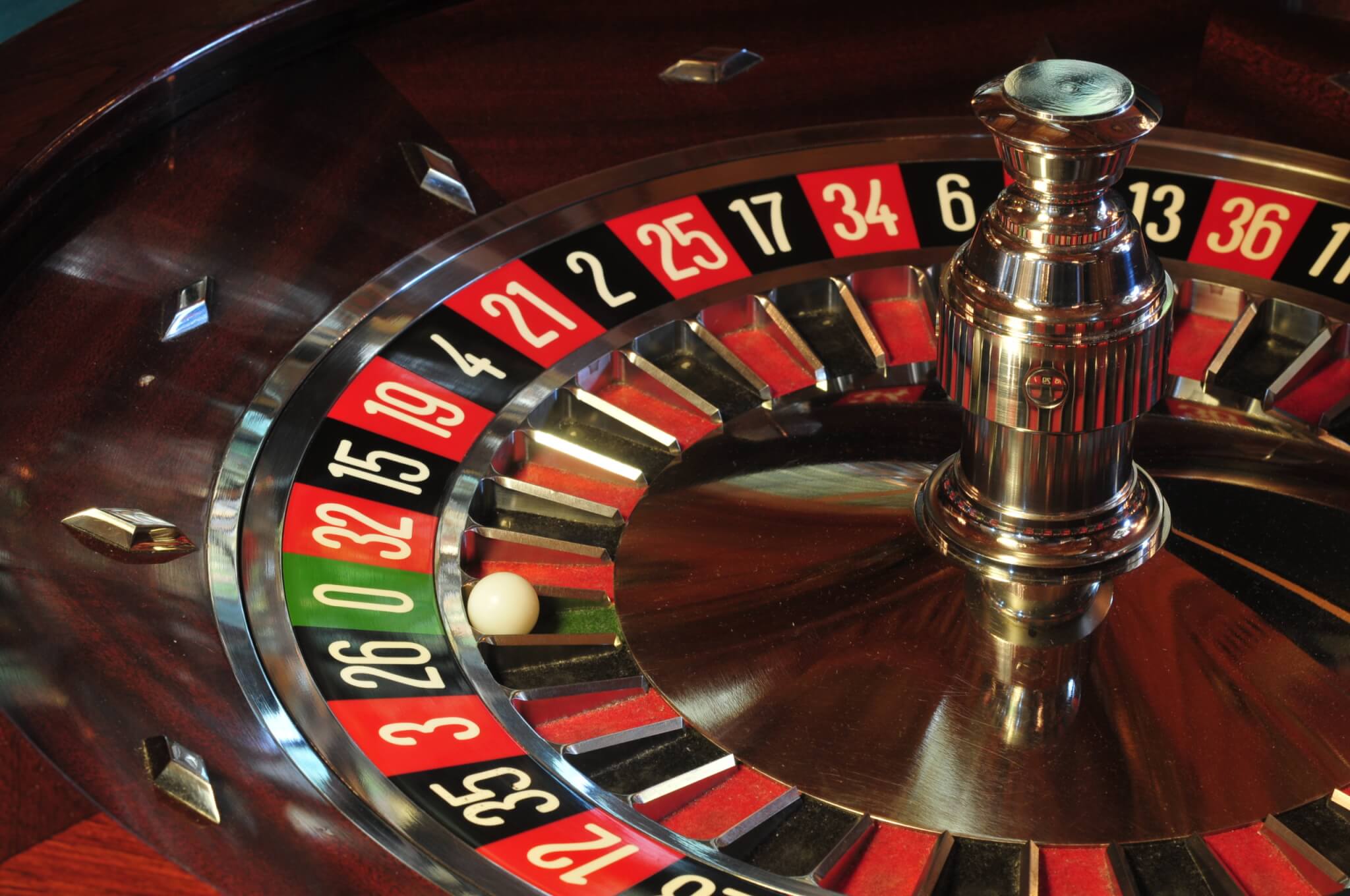
So, in our casinos, we have various customer groups that you can recognize by the machines they play on: the small players, who really play for just five to ten cents per spin; then the group that plays on the machines of twenty to forty euros per spin; and then, of course, there are the roulette players.
Also a special group, a more difficult group, but a group with which you have the most fun interaction.
Moreover, the success of Fairplay Casinos lies with the employees. My employees here make the difference, because essentially, the same machines are found in all gaming halls.
That is why this is such a great job. I have been able to fine-tune my team for a good year to bring it to the level it operates at now: a top team.
As a result, I now want to further raise the knowledge level of my team and create an additional hierarchical layer. That is still an unofficial task, but I want to appoint a real floor manager there. That requires some organizational steps that I need to take.
I only want to leave here when I can leave behind a self-managing team. I believe that creating an intermediate layer also makes it more attractive to come and work for us.
Furthermore, such an 'intermediate layer' is actually a wonderful breeding ground for talent who aspire to become branch managers. This is very important for the company, because attracting (floor) managers from outside has not worked so far, due to the specific nature of the work in our industry.
What is your role at Fairplay Casinos?
Ilse (laughing) continues her enthusiastic speech: 'Few people have insight into what my work actually looks like. At a party, they sometimes ask me: why I almost never work in the evenings?'
Likewise, we are open 140 hours a week and my work week really only has 40 hours, so I am away more often than I am. I still work in the evenings sometimes, but really a lot less than when I was still present 'on the floor'.
I really have a full-time management job now. During the first wave of corona, we were closed for three months, but I just kept working full-time to have everything ready again when we were allowed to reopen.
At the same time, for example, we had to clean everything thoroughly. We conducted a lot of training for my team to raise their knowledge level.
Even though we were closed, the machines still had to operate. This is because they contain memory, and if they sit idle for too long, the memory 'empties,' as it is called; and we need that information for the gambling authorities, because very strict rules apply in our industry.
In addition, our internal IT department did a great deal of work to replace older automation systems. That was a pleasant bonus.
We also thoroughly reviewed all procedures during that period. You know, there is always something to do in an organization like that. Just think of the daily financial transactions, for example.
Finally, that mainly happens early in the morning. The employees for this specific task start as early as 05:00 AM.
All the machines are being emptied; there are cash boxes among them that weigh five to six kilos, and we have more than 100 machines. In short, that is tough work, and all that money has to be counted.
Moreover, our daily deposit, meaning what customers put into the machines, is between one hundred thousand and one hundred and fifty thousand euros, so that is a lot of coins.
Even now, during the corona period, which is really affecting us, the coins put in are still about sixty thousand euros a day. In other words: a lot of money changes hands in this business, and as a manager, that is a very heavy responsibility.
What is so fascinating to you about working in a casino?
Finally, Ilse: 'On peak days we have one hundred to one hundred and eighty guests in the house and then it is really a mad rush, but now it is quiet due to the second lockdown. Fortunately, the work behind the scenes continues as usual.'
Mainly a lot of financial matters, planning, responsibility for all the funds available, my employees' schedules, reporting on what is happening—actually too much to mention. In addition, I am very active in working groups within the central organization.
All in all, I am currently very busy with marketing, planning which promotions to schedule, and our revised opening policy. Normally, we are always open, 365 days a year, but now we will probably close for New Year's Eve because we are not allowed to have operational hospitality services.
No day is the same here, and every day you are surprised anew.
You have completed management training at our organization. Why did you do that and what was the added value of this training?
First of all, Ilse is very firm about this: 'My main reason for taking that course was that I wanted to have more tools to motivate and inspire my employees.'
I tended to say too much myself and let less come from my employees, which meant I didn't make use of their ideas and creativity.
Furthermore, I kept them lazy and passive. It is nice to mention a few things from the training now that I really enjoy on a daily basis and can also apply very easily.
Look, this training works with a clear step-by-step plan that you can easily and immediately put into practice.
Moreover, at some point that becomes second or new nature to you, and if you pick up the step-by-step plan again after six months, you can very quickly pick up the things that have slipped away a bit.
Another part that I really use a lot is “MORE-COAHING”. I have been able to use it very well in a number of improvement processes with employees and they have been very successful, if I say so myself.
In addition, giving compliments and the return it yields is truly remarkable, and finally, I find the so-called 'improvement conversation' to be a really good tool. For example, I have already received an assignment from the organization a few times to address a poorly performing branch.
By applying the technique of 'improvement conversations', employees now know exactly what is expected of them and what the consequences are if they do not sufficiently address it.
Furthermore, I have personally benefited greatly from it in conversations with people who no longer felt comfortable in their roles and from whom I was able to part ways in a pleasant manner.
Kenneth Smit uses Insights Discovery personality profiles in the training; as a result, I understand my own communication preferences much better, as well as those of my employees. Consequently, conversations flow much better.
Next, I even asked my own manager to look at my 'blind spots,' which led to more self-reflection. What I like about those profiles is that they focus on the positive aspects of people, which is exactly what they are capable of.
Finally, the meeting techniques included in the training are very recognizable and applicable. I now take the lead in meetings much more. It saves a lot of time and you no longer get bogged down in endless conversations; this is much more effective and efficient.
What is your market position in the Netherlands?
Also," Ilse thinks for a moment and says: "Our competitors are the other slot machine halls like Jack's Casino, Flash, and a few other clubs. There is still a kind of taboo surrounding our market for many people."
This is very different from Holland Casino, for example, which is not a competitor because it has a completely different marketing policy and presents itself as an 'evening out', while you can ultimately lose a lot more money there.
In short, our distinguishing factor compared to the competitors is that we focus much more on larger players, and therefore on higher stakes.
And in that market, we give away the most prizes nationwide—around 17 million in jackpots last year. We also only give away money. In addition, we have special promotions such as 'the bank run', in which we raffle off one hundred thousand euros among our customers on draw nights.
What does the future look like for your company?
By the way, Ilse looks stern: 'There is a system coming called CRUKS, Central Register for Exclusion from Gambling; this means a national registration system of people who are not allowed to gamble, the well-known white list.'
Currently, customers who are on a casino's 'whitelist' can still play elsewhere, but with the new system, that is no longer possible.
However, this is really going to make a difference for customers.
This will also be very difficult for our employees, because they will have to start recognizing people on that list based on a photo. This is a major challenge to our duty of care. And what is going to happen online?
Therefore, that market will also open up in the coming year. We and many of our competitors had already established gambling companies in Malta, for example. That is going to change in the coming year, and the battle to conquer the online gambling market will be fierce because a lot of money is involved.
Some casinos are already operating cashless, using cards instead of cash. For many players, holding coins in their hands and hearing them drop when they win are part of the gaming experience, but that is certainly going to change. In short, there is still much to happen here as well.
And what about your future?
After all, the question about her future and where she wants to be in 10 years brings a smile to Ilse's face: 'I currently manage the largest casino location and I do notice that a certain degree of routine is starting to set in my work.
I struggle to fill my 40 hours with useful tasks and that is very dangerous for an adventurer like me.
Nevertheless, a role as a formula manager seems very challenging to me, for example; on the other hand, I am also curious about that added value in a completely different industry or in a role as a change manager or crisis manager.
In short, there are still plenty of challenges for this ambitious jack-of-all-trades. With the training from Kenneth Smit, I have certainly gained a substantial amount of knowledge and skills that I want to be able to put to use for years to come, together with all my experience.