

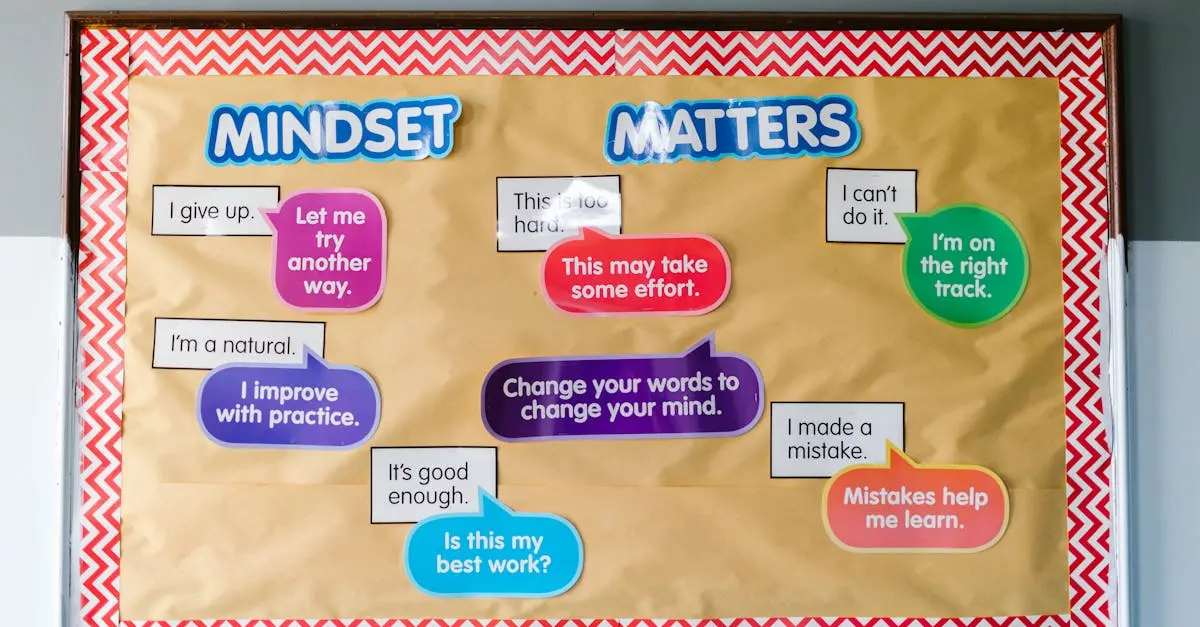
Your skills and knowledge determine only a part of your success. It is your mindset which makes the difference between stagnation and growth. The concept of “master your mindset” is rapidly gaining popularity among professionals and managers who want to get more out of themselves and their team. But what exactly does it mean to master your mindset? And how do you get started?
What does master your mindset mean?
Mastering your mindset means consciously taking control of your thought patterns, beliefs, and mental habits. The idea is based on the work of psychologist Carol Dweck, who distinguished between a fixed mindset and a growth mindset. People with a fixed mindset believe that their talents and intelligence are fixed. People with a growth mindset view challenges as opportunities to learn and grow.
In the workplace, this manifests in how you handle setbacks, feedback, and change. A professional with a strong mindset does not view a rejected proposal as failure, but as valuable information to make the next proposal stronger.
Why is your mindset so important?
Research shows that mindset directly influences performance, motivation, and well-being. Teams with a growth mindset are more innovative, resilient, and perform better under pressure. For managers, this means that investing in mindset is at least as important as investing in professional expertise.
Moreover, mindset is contagious. A leader who openly learns from mistakes and embraces challenges creates a culture in which the team dares to do the same. This aligns directly with the development of personal development as a core value within your organization.
5 strategies to master your mindset
1. Recognize your inner critic
Everyone has an inner voice that sows doubt: “I can’t do this,” “I’m not good enough for this.” The first step is to recognize this voice without going along with it. Observe your thoughts as if you were an outsider. Ask yourself: is this a fact or an assumption?
2. Reformulate challenges
The way you frame a situation determines how you react to it. Replace “This is a problem” with “This is a puzzle I can solve.” Replace “I have failed” with “I have learned what doesn’t work.” This reframing is not naive positivism, but a conscious choice to think productively.
3. Surround yourself with growth-oriented thinkers
Your mindset is strongly influenced by the people around you. Seek out colleagues and mentors who challenge and inspire you. Avoid energy drainers who primarily seek confirmation of why something cannot be done. In a team setting, you can encourage this by celebrating both successes and learning moments.
4. Set learning goals instead of performance goals
Performance goals focus on the result: “I want to close this deal.” Learning goals focus on the process: “I want to learn how to present more effectively at the executive level.” Learning goals keep you motivated, even if the result is temporarily disappointing.
5. Build mental resilience
Resilience is the ability to get back up after a setback. You train this by consciously stepping outside your comfort zone, reflecting on difficult moments, and taking good physical care of yourself. Sleep, exercise, and relaxation are the foundation upon which a strong mindset rests.
Master your mindset as a leader
As a leader, you have a special responsibility: your mindset influences that of your entire team. By openly sharing how you handle challenges, normalizing mistakes, and actively rewarding growth, you create a psychologically safe environment. And it is precisely in such an environment that people dare to innovate, take risks, and bring out the best in themselves.
Do you want to discover how to take your mindset and that of your team to the next level? At Kenneth Smith we offer training courses that help you become mentally stronger and more effective. Also check out our article about emotional intelligence for more insights. Contact us for a no-obligation consultation.
Mastering your mindset means consciously taking control of your thought patterns and beliefs. You learn to develop a growth mindset, where you view challenges as opportunities to grow, rather than threats.
A fixed mindset assumes that talents and intelligence are fixed and cannot be changed. A growth mindset believes that through effort, practice, and perseverance, you can grow and become better at what you do.
You develop a stronger mindset by recognizing your inner critic, reframing challenges as learning opportunities, surrounding yourself with growth-minded colleagues, setting learning goals, and working on your mental resilience.